by Rosie Chadwick
Campaigns that foster an ‘us v them’ mentality leave lasting scars, as we’ve found to our cost during Brexit, election contests around the world and recent clashes on climate and migration. Hardly surprising then that some (though by no means all) campaigners are searching for approaches that don’t demonise opponents or risk deepening divisions.
In his paper ‘Building a larger us: five questions for change-makers’, seasoned activist Alex Evans makes the case for new ways of campaigning and poses these five questions:
How can we as changemakers build belonging through our work?
How can we bridge divides? How can conversations bridge differences and how can we build this into our work as changemakers?
How can we appeal to love not fear in looking to mobilise supporters?
How can we help people and communities recover from experiences of trauma and loss?
How can we tell the kind of stories that bring people together?
We at The Mint House think restorative justice and practice can be part of the answer to these questions.
Building belonging comes through strongly as a theme in large scale and systematic studies of restorative practice in schools. [1]
Widely used in youth justice and community settings, restorative justice and conferencing have enabled courageous conversations across sectarian divides in Northern Ireland. [2]
Mint House trustee Pete Wallis has written powerfully about how restorative justice nurtures empathy, an important element in overcoming fear. [3]
Truth and Reconciliation Commissions build on restorative justice principles to listen to victims, document abuses and acknowledge harms, helping to address collective trauma. [4]
Finally, studies including that by Judit Hajdu on Narrative practices in restorative justice draw out how telling and hearing stories are at the heart of restorative processes, enabling the sharing of feelings and experiences that others can relate to. [5]
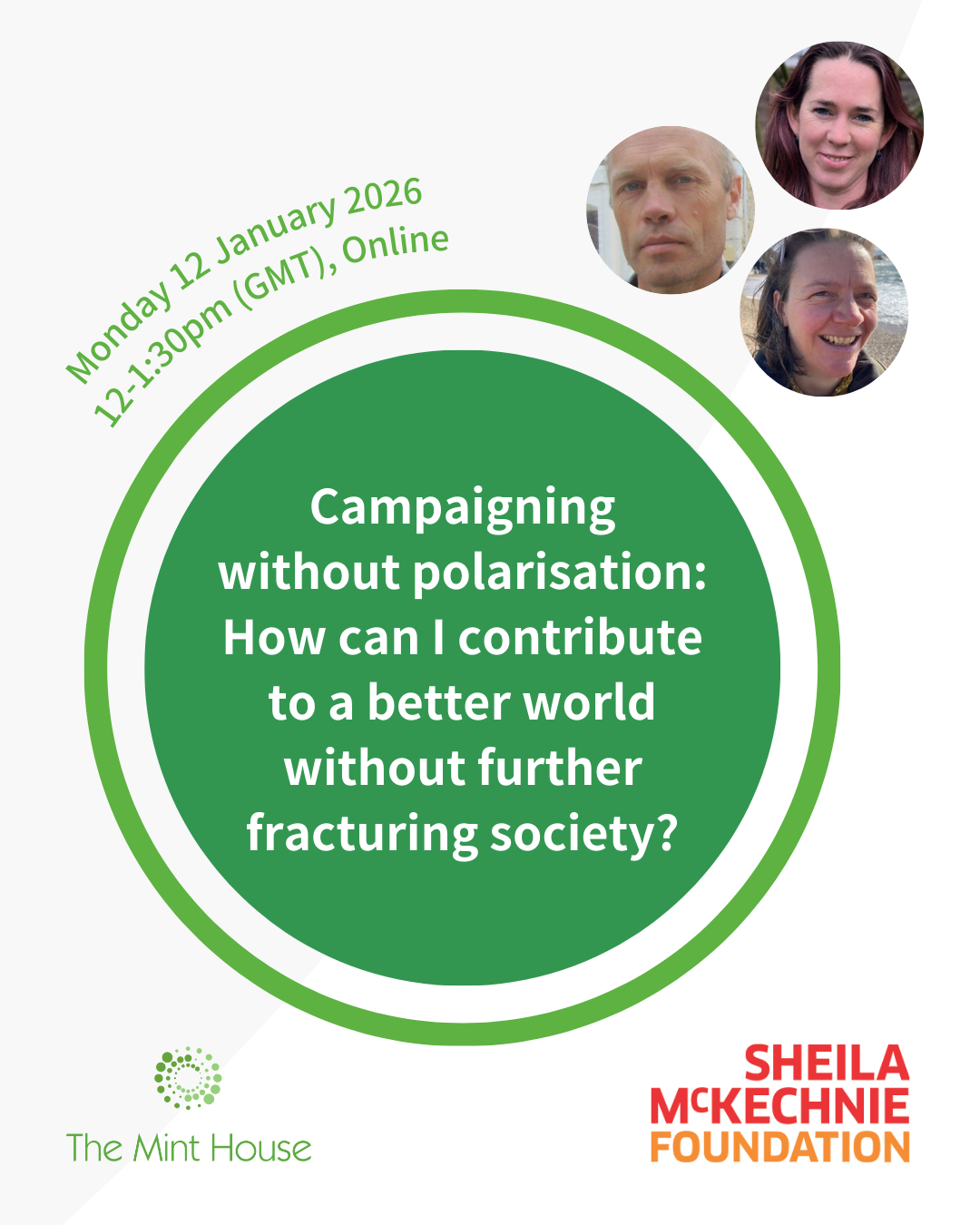
We’re excited that the two worlds of restorative practice and campaigning will be coming together on 12 January 2026 at an event, hosted in partnership with the Sheila McKechnie Foundation, to explore ways that restorative practice can help to change the world without dividing it. We hope that you can join is in what we hope you agree is an important conversation for our times.